Most brands no longer grow from one platform alone.
A business may post product visuals on Instagram, short videos on TikTok, tutorials on YouTube, updates on Facebook, conversations on X, professional insights on LinkedIn, and community announcements on Telegram.
That sounds powerful, but it also creates a problem.
The more platforms you use, the easier it becomes to lose focus.
Many creators, agencies, and businesses start with good intentions. They open accounts everywhere, publish for a few weeks, and then the workflow becomes messy. Content is duplicated without strategy. Posting schedules become inconsistent. Campaigns are hard to track. Different platforms start competing for attention instead of working together.
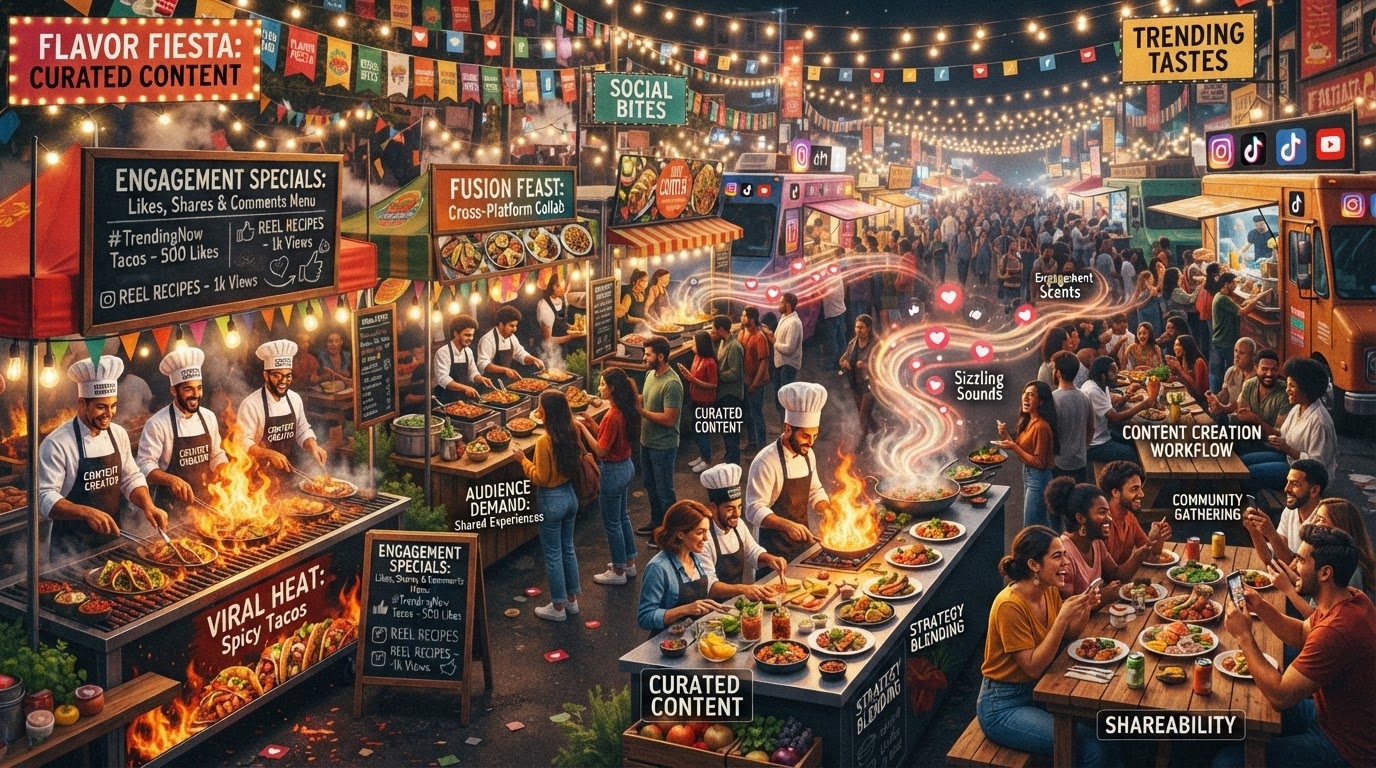
Multi-platform social media marketing is not about being everywhere randomly. It is about building a clear system where each platform has a purpose.
SMMDAY, available at https://smm.day, is designed for users who want a centralized social media marketing platform to manage digital marketing services across multiple channels from one simple dashboard.
What Is Multi-Platform Social Media Marketing?
Multi-platform social media marketing means using more than one social media channel as part of a connected marketing strategy.
It does not mean copying the same post everywhere.
A strong multi-platform strategy understands that each platform has a different role.
Instagram may support visual identity.
TikTok may help with short-form discovery.
YouTube may build long-term search visibility.
Facebook may support local trust and communities.
X may help with fast updates and conversations.
LinkedIn may build professional authority.
Telegram may support direct community communication.
The goal is to make these platforms work together instead of treating them as separate random tasks.
A Best Service SMM Panel can support this kind of workflow by helping users organize social media marketing services across different platforms more efficiently.
Why One Platform Is Usually Not Enough
Depending on only one social platform can be risky.
Algorithms change. Audience behavior shifts. A platform that works well today may become less effective later. Also, different people prefer different platforms.
A customer may discover a product on TikTok, check the brand’s Instagram, watch a YouTube review, and finally join a Telegram community before making a decision.
That is why multi-platform visibility matters.
For businesses, multiple platforms create more touchpoints.
For creators, they create more discovery opportunities.
For agencies, they create stronger client campaign structures.
For resellers, they expand service possibilities.
For startups, they help explain products in different formats.
The challenge is not whether multiple platforms are useful. The challenge is how to manage them without creating chaos.
Give Each Platform a Clear Role
The first step is assigning a role to each platform.
Do not use every platform in the same way.
A simple platform role map could look like this:
Instagram for visual branding and lifestyle content.
TikTok for short videos and discovery.
YouTube for tutorials, reviews, and long-term content.
Facebook for community, local trust, and page credibility.
X for fast updates, conversations, and founder-led content.
LinkedIn for B2B authority and professional visibility.
Telegram for announcements, private communities, and direct updates.
When every platform has a role, content planning becomes easier.
You stop asking, “What should I post everywhere?”
Instead, you ask, “What is the best version of this message for each platform?”
That small change makes social media marketing much more strategic.
Build One Core Message First
Before adapting content for different platforms, start with one core message.
For example, if you are launching a new service, the core message might be:
“We help agencies manage social media marketing services from one dashboard.”
Once the message is clear, you can adapt it.
On LinkedIn, it can become a professional post about agency workflow.
On X, it can become a short thread about marketing efficiency.
On YouTube, it can become a tutorial or explainer video.
On TikTok, it can become a quick before-and-after workflow clip.
On Instagram, it can become a carousel or Reel.
On Telegram, it can become a direct announcement to your community.
This keeps your campaign consistent without making every platform feel identical.
SMMDAY at https://smm.day can be part of this workflow for users who want to manage multi-platform social media marketing services from one environment.
Do Not Copy and Paste the Same Content Everywhere
Copying the same content across every platform is one of the most common mistakes.
It saves time in the short term, but it usually performs poorly.
Every platform has its own culture.
TikTok users expect fast, visual, native content.
LinkedIn users expect useful insights, business lessons, or professional stories.
X users respond to sharp thoughts, updates, and conversations.
YouTube users often want deeper content or searchable answers.
Instagram users care about visual presentation and identity.
Telegram users usually want direct, useful, community-focused updates.
The message can stay the same, but the format should change.
This is how one idea becomes a real multi-platform campaign instead of a lazy repost.
Use Content Repurposing the Right Way
Repurposing is not the same as duplicating.
Good repurposing means taking one idea and reshaping it for different channels.
A blog post can become:
-
A LinkedIn article summary
-
An X thread
-
A YouTube video outline
-
A TikTok script
-
An Instagram carousel
-
A Telegram announcement
-
A Facebook page post
A YouTube video can become:
-
Several YouTube Shorts
-
TikTok clips
-
Instagram Reels
-
Blog sections
-
X posts
-
LinkedIn insights
-
Community discussion topics
This helps users get more value from each piece of content.
For agencies and creators, repurposing is one of the best ways to stay active across multiple platforms without creating everything from scratch.
Create a Simple Weekly Workflow
Multi-platform marketing becomes easier when there is a repeatable weekly workflow.
Here is a simple example:
Monday: Publish one core blog post or main content piece.
Tuesday: Turn it into a LinkedIn post and X thread.
Wednesday: Create a short video version for TikTok and Instagram Reels.
Thursday: Share a longer explanation on YouTube or a community update on Telegram.
Friday: Review performance and prepare next week’s content.
This is much easier than randomly posting whenever you remember.
A good workflow reduces decision fatigue.
Instead of thinking from zero every day, you already know what type of content each platform needs.
A Best Service SMM Panel can support the operational side of this workflow by helping users manage social media marketing services and platform activity more efficiently.
Multi-Platform Marketing for Agencies
Agencies need strong systems because they manage different clients with different platform needs.
One client may care about Instagram and TikTok.
Another may need LinkedIn and YouTube.
Another may be focused on Telegram and X.
If an agency does not have a clear workflow, multi-platform work becomes difficult quickly.
An agency should build internal systems for:
-
Platform selection
-
Content adaptation
-
Campaign planning
-
Service management
-
Reporting
-
Client communication
-
Performance review
-
Internal linking for blog content
-
Repurposing schedules
A centralized social media marketing platform such as https://smm.day can help agencies manage digital marketing services across different platforms from one dashboard.
The goal is not only to do more work. The goal is to manage work more clearly.
Multi-Platform Marketing for Creators
Creators often feel pressure to be everywhere.
But creators should not try to create completely different content for every platform every day. That usually leads to burnout.
A better approach is to build around content pillars.
For example, a creator may choose three pillars:
-
Educational tips
-
Personal experience
-
Product or service recommendations
Then each pillar can be adapted across platforms.
A personal story may work well as a LinkedIn post.
A quick tip may work well on TikTok.
A deeper explanation may work well on YouTube.
A short opinion may work well on X.
A visual summary may work well on Instagram.
Creators should use platforms based on their strengths, not just because everyone else is using them.
Multi-Platform Marketing for E-commerce Brands
E-commerce brands can benefit heavily from multi-platform marketing.
A customer often needs to see a product multiple times before buying.
An online store can use platforms like this:
Instagram for product visuals and lifestyle content.
TikTok for product discovery and short demonstrations.
YouTube for detailed reviews and tutorials.
Facebook for customer trust and community updates.
Telegram for product drops and loyal customer announcements.
X for brand updates or niche conversations.
The same product can become many types of content.
A skincare product can become a TikTok demonstration, an Instagram Reel, a YouTube tutorial, a blog article, a customer story, and a Telegram launch announcement.
That is the power of multi-platform content planning.
Multi-Platform Marketing for Startups
Startups need to explain what they do clearly and repeatedly.
A startup may use LinkedIn to reach professionals, X to share founder updates, YouTube to explain the product, TikTok to show quick demos, and Telegram to build a community.
This is especially useful for SaaS, AI, Web3, marketplaces, and digital products.
Startup marketing works better when the message is repeated in different ways.
People rarely understand a new product after seeing it once.
They may need a demo, a founder story, a comparison, a use case, a customer example, and a short video before they really understand the value.
Multi-platform marketing helps startups tell the same story from different angles.
Track Each Platform Differently
Not every platform should be measured the same way.
A TikTok video may be judged by views, watch time, and shares.
A LinkedIn post may be judged by comments, profile visits, and business inquiries.
A YouTube video may be judged by watch time, search traffic, and subscribers.
A Telegram channel may be judged by active members and message views.
An Instagram Reel may be judged by saves, shares, and profile visits.
An X thread may be judged by replies, reposts, and link clicks.
If you use the same metric everywhere, you may misunderstand performance.
Good multi-platform marketing requires platform-specific tracking.
The question is not always “Which platform got the most views?”
Sometimes the better question is “Which platform helped the campaign goal most?”
Build Internal Links Between Your Content
For websites and blogs, internal links matter.
If you publish content about Instagram marketing, it should link to related articles about TikTok, YouTube, content promotion, campaign management, and choosing an SMM panel.
Internal links help users discover more content. They also help search engines understand the structure of your site.
For SMMDAY, multi-platform articles can connect many existing blog posts together.
For example, this article can link to:
-
Instagram SMM
-
TikTok SMM
-
YouTube SMM
-
LinkedIn SMM
-
Telegram SMM
-
Social campaign management
-
Content promotion
-
SMM dashboard
This turns individual posts into a connected SEO structure instead of isolated pages.
Avoid Doing Too Much Too Soon
Multi-platform marketing does not mean you need to master every channel immediately.
For beginners, starting with too many platforms can create confusion.
A better approach is:
Start with two or three platforms.
Build a repeatable workflow.
Track what works.
Repurpose content consistently.
Add new platforms only when the system feels manageable.
For example, an e-commerce brand might start with Instagram, TikTok, and YouTube Shorts.
A B2B startup might start with LinkedIn, X, and YouTube.
A community project might start with Telegram, X, and blog content.
Growth should be structured, not chaotic.
Common Multi-Platform Marketing Mistakes
Many users make the same mistakes when managing several platforms.
Common mistakes include:
-
Posting the exact same content everywhere
-
Starting too many platforms at once
-
Not giving each platform a clear role
-
Ignoring platform-specific content formats
-
Not tracking results separately
-
Creating content without a core message
-
Not repurposing content properly
-
Forgetting internal links
-
Not using a weekly workflow
-
Choosing tools without a strategy
Avoiding these mistakes can immediately improve your marketing process.
Multi-platform marketing works best when there is structure behind it.
How SMMDAY Supports Multi-Platform Workflows
SMMDAY is designed for users who want a simple and centralized way to manage social media marketing services.
As a Best Service SMM Panel, https://smm.day can support agencies, creators, resellers, freelancers, startups, e-commerce brands, and online businesses that need better workflow organization.
The platform is useful for users who want to manage digital marketing services across major platforms without depending on scattered tools and disconnected processes.
SMMDAY can be part of a broader marketing system that includes:
-
Content planning
-
Platform-specific strategy
-
Campaign management
-
Service organization
-
Blog promotion
-
Internal linking
-
Performance tracking
-
Reseller workflows
-
API-based growth
A good platform does not replace strategy. It helps users manage strategy more efficiently.
Final Thoughts
Multi-platform social media marketing is powerful, but only when it is organized.
The goal is not to post everywhere. The goal is to use each platform with a clear purpose.
Instagram, TikTok, YouTube, Facebook, X, LinkedIn, and Telegram can all support different parts of a digital marketing strategy. But without a system, managing them can become overwhelming.
The best approach is to start with one core message, adapt it for each platform, repurpose content intelligently, track results separately, and build a repeatable workflow.
For users searching for a Best Service SMM Panel, SMMDAY at https://smm.day provides a centralized social media marketing platform designed to support modern multi-platform marketing workflows.
In 2026, successful marketers will not be the ones who post the most. They will be the ones who connect the right message with the right platform at the right time.
Frequently Asked Questions
What is multi-platform social media marketing?
Multi-platform social media marketing means using several social media channels together as part of a connected marketing strategy.
Should I post the same content on every platform?
No. The core message can stay the same, but the format should be adapted for each platform.
Which platforms should I use first?
It depends on your audience. Common combinations include Instagram and TikTok for visual brands, LinkedIn and X for B2B startups, and YouTube with blog content for educational marketing.
Can an SMM panel help with multi-platform marketing?
Yes. An SMM panel can help users manage social media marketing services and organize workflows across multiple platforms.
Where can I find a multi-platform social media marketing platform?
Many agencies, creators, resellers, and businesses explore platforms such as https://smm.day when searching for multi-platform SMM solutions and Best Service SMM Panel tools.